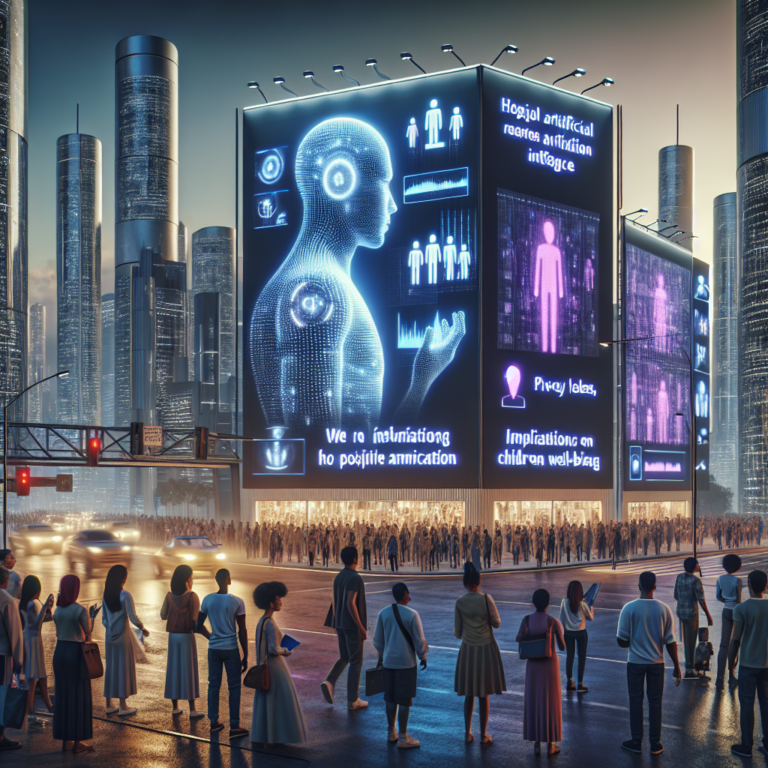
AI: Not Yet a Revolutionary Influence Tool, US Says
The potential for artificial intelligence (AI) to reshape our world and its influence on politics has been a topic of considerable discussion. While AI has shown promise in various fields, the U.S. government underscores that its impact as a revolutionary influence tool may not be as imminent as some might believe. This blog delves into the nuanced perspectives on AI in politics and global influence, examining current capabilities and future potential.
Current Role of AI in Politics
Artificial intelligence has certainly made a mark in our daily lives, from personal assistants like Siri and Alexa to more sophisticated applications in healthcare and finance. However, when it comes to politics, its role remains somewhat limited and surrounded by cautious optimism.
Data Analysis and Voter Behavior
One tangible area where AI has started to show its potential is in data analysis and voter behavior prediction. Political campaigns now utilize AI algorithms to analyze vast amounts of demographic data and predict voter preferences and behaviors. This allows campaign teams to tailor their messages more effectively:
- Identifying key voter groups
- Crafting personalized campaign messages
- Optimizing resource allocation for canvassing
Monitoring and Combating Misinformation
Another critical application is in the monitoring and combating of misinformation. AI technologies can scan social media platforms, news sites, and other digital spaces to identify and flag potential misinformation. This is crucial in maintaining the integrity of information during elections and other political events.
AI’s Limitations in Political Influence
Despite its promising applications, AI still faces significant limitations in becoming a revolutionary tool for political influence. The U.S. government and experts in the field emphasize several key areas of concern.
Ethical and Privacy Concerns
The use of AI in gathering and analyzing data raises ethical and privacy concerns. Data privacy laws vary greatly across different regions, and there’s a fine line between legitimate data use and invasive surveillance. Ensuring AI respects users’ privacy while effectively handling data is a critical challenge.
Bias in AI Algorithms
AI systems are only as good as the data they’re trained on. If the data contains biases, the AI will likely reproduce these biases, leading to skewed results. This is especially problematic in politics, where unbiased, fair decision-making is paramount:
- Potential for reinforcing existing biases
- Impact on minority and marginalized groups
- Undermining public trust in political processes
Complexity of Political Systems
Political systems are highly complex and not easily reducible to data points. Human behavior, ideology, and strategic thinking play significant roles that AI, in its current form, cannot fully comprehend. As a result, the impact of AI on political strategy and decisions is somewhat limited.
Future Prospects of AI in Political Influence
While the current influence of AI in politics might be limited, its future prospects cannot be ignored. Researchers and policymakers are exploring new ways to integrate AI into political systems responsibly.
Enhanced Civic Engagement
AI has the potential to enhance civic engagement by providing citizens with better access to information and more personalized political interactions. AI-driven platforms could facilitate more meaningful dialogues between politicians and the electorate.
Improving Government Services
The future might also see AI being used to improve government services. By automating administrative tasks and providing insights through data analysis, AI can help streamline operations and make government more efficient and responsive to citizens’ needs:
- Automating administrative processes
- Enhancing decision-making with data insights
- Improving public service delivery
AI in Diplomacy and International Relations
Artificial intelligence could play a pivotal role in diplomacy and international relations. AI-driven analytics can help governments better understand global trends and shape foreign policy accordingly. It could also facilitate more precise and informed decision-making during negotiations and conflict resolutions.
Conclusion
While AI’s influence on politics and global affairs is growing, it is not yet the revolutionary tool that some may envision. The U.S. government and global experts recognize both the potential and limitations of AI in this domain. Ethical considerations, data biases, and the complexity of political systems all present challenges that must be navigated carefully.
As technology continues to advance, the integration of AI into political systems must be approached with caution, ensuring that advancements are made responsibly and for the benefit of all. By understanding the current limitations and future potential of AI, we can better prepare for a world where technology and politics intersect meaningfully.
About the Author