“`html
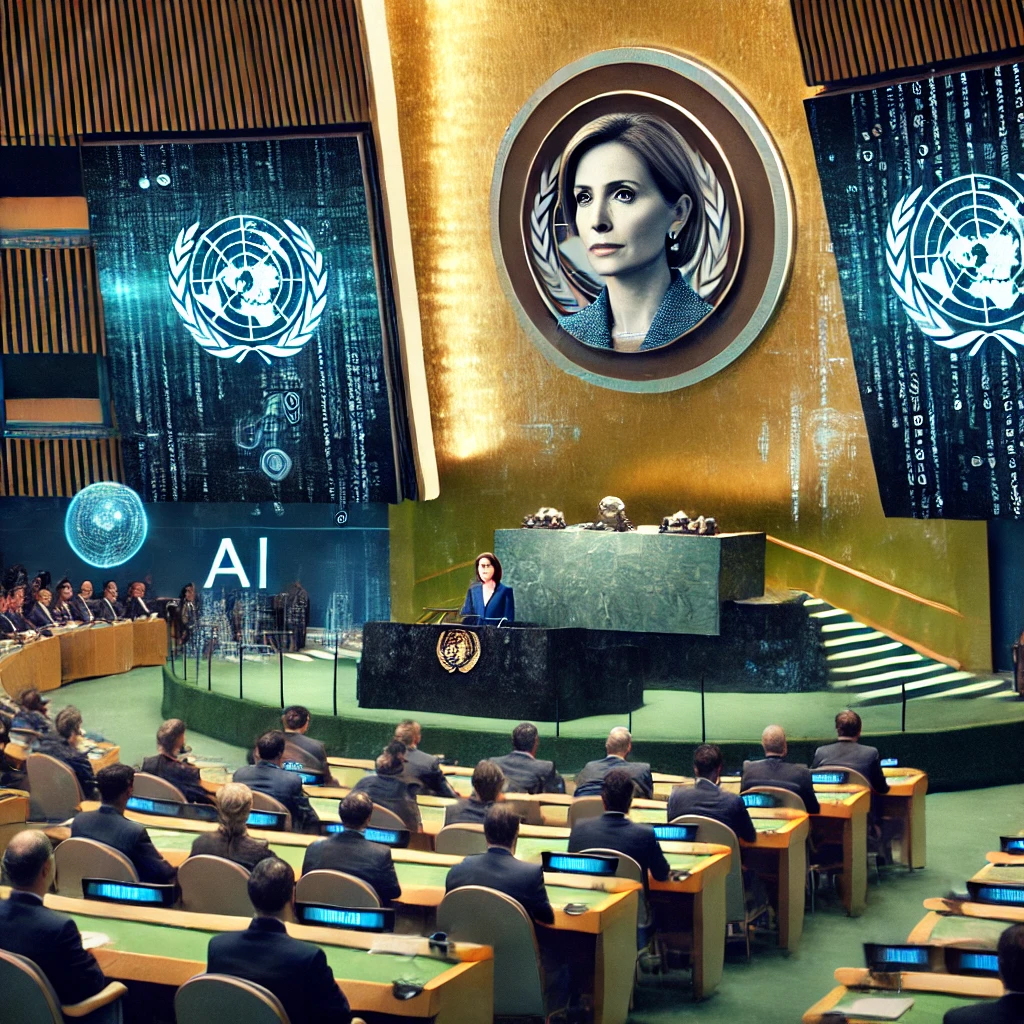
Create an Image Depicting a Female Political Leader Speaking at the United Nations
In a powerful and impassioned address to the United Nations, a female political leader took the center stage to emphasize the critical importance of ensuring that artificial intelligence (AI) remains governed by human oversight. With the grandeur of the UN General Assembly hall as the backdrop, complete with its iconic architecture and flags from member countries, the event took on a gravitas befitting the topic at hand.
The Gravity of AI Governance
In today’s digital age, artificial intelligence is advancing at an unprecedented pace. As these technologies evolve, their impact on everything from our daily lives to global politics becomes ever more profound. The female leader’s speech highlighted the benefits and potential pitfalls of AI, arguing that while AI can offer extraordinary benefits, it also poses unique risks that must be mitigated through robust human governance.
Why Governance Matters
AI systems have already begun to demonstrate extraordinary capabilities, from predicting natural disasters to improving healthcare outcomes. However, these powerful tools also have the potential to make erroneous decisions, perpetuate biases, and even contribute to significant ethical dilemmas.
- AI Decision-Making: While AI systems can process data at speeds far beyond human capability, they lack the nuanced understanding that humans bring to decision-making processes.
- Bias in AI: Algorithms are only as impartial as the data used to train them. If the data contain biases, those biases will be reflected in the AI’s decisions.
- Ethical Concerns: Ethical considerations must be central to the development and deployment of AI technologies to ensure they benefit humanity as a whole.
Human Oversight in AI
The leader stressed that human oversight is non-negotiable when it comes to deploying AI technologies. She proposed several measures to ensure that AI is governed effectively:
- Transparency: AI systems and algorithms should be transparent, allowing their decision-making processes to be understood and scrutinized by humans.
- Accountability: There must be accountability mechanisms in place for decisions made by AI, ensuring that humans are always responsible for significant outcomes.
- Ethical Frameworks: Comprehensive ethical frameworks should guide AI development and deployment. These frameworks should be universally recognized and adhered to, ensuring that AI benefits are maximized while minimizing potential harms.
Global Collaboration
The leader also called for a coordinated, global approach to AI governance. Given that AI technologies do not adhere to national borders, international collaboration is crucial in establishing consistent standards and practices:
- International Standards: Countries should work together to develop internationally recognized standards for AI development and deployment.
- Cross-Border Regulations: Regulations should be designed in a way that they can be enforced across borders to prevent any state from becoming a safe haven for unethical AI practices.
Only through global cooperation can we create a cohesive framework that ensures the responsible use of AI.
The Role of Political Leaders
Political leaders have a crucial role to play in shaping the future of AI governance. The speech at the United Nations served as a call to action for other leaders to take responsibility and ensure that AI technologies are used ethically and responsibly. By working together, they can avert potential crises and foster a future where AI benefits everyone.
Public Awareness
It’s also essential to recognize the role of public awareness in this dialogue. The general public needs to be informed about AI, its potential, and its risks. Policymakers must engage in open dialogues with citizens to ensure that the development and deployment of AI technologies align with societal values and expectations.
- Educational Initiatives: Implementing educational programs that inform the public about AI technologies and their implications.
- Public Consultations: Engaging with the public through consultations and discussions to gather input and ideas on AI governance.
Conclusion
The female political leader’s speech at the United Nations was a compelling reminder of the need for human governance over artificial intelligence. As we stand at the crossroads of technological innovation and ethical responsibility, it is vital to ensure that AI technologies are guided by human values, transparency, and accountability. Only through robust governance and international collaboration can we harness the full potential of AI while safeguarding the interests of humanity.
This speech not only captivated the audience at the United Nations but also ignited a global conversation on how best to manage one of the most potent tools of our time. As the discussions continue, the emphasis must remain on human oversight and the ethical frameworks that will guide AI into a future that benefits us all.
“`
About the Author