1090
“`html
Create an Image That Depicts AI in Political Campaigns: Trust and Uncertainty
In today’s digital age, the intersection of technology and politics is evolving rapidly, bringing both opportunities and challenges. As political candidates turn to new technologies like generative AI to create persuasive advertisements, a new layer of complexity is added to the electoral landscape. A recent study highlighted by Engadget reveals a critical concern: viewers tend to distrust political candidates who incorporate AI-generated content into their campaigns. Let’s delve into the implications of this finding and explore how it shapes the future of political advertising.
The Rise of AI in Political Campaigns
AI technology has transformed various industries, and politics is no exception. From data analysis to automated content creation, political campaigns are leveraging AI to streamline processes and enhance outreach efforts.
AI-Generated Political Ads
AI-generated political ads are created using algorithms that can craft persuasive messages, design visuals, and even simulate candidate speeches. These technologies are often employed to:
- Efficiently create large volumes of content
- Personalize messages for different voter demographics
- Make rapid adjustments based on real-time feedback
Despite these advantages, the reliance on AI technologies in these contexts raises concerns about authenticity, transparency, and trustworthiness.
The Trust Deficit: Viewers’ Skepticism Towards AI
Trust is a cornerstone in political campaigns. When a candidate’s message is perceived as insincere or manipulated, it can lead to voter skepticism and backlash. According to the Engadget-reported study, audiences showed a notable distrust toward candidates using AI-generated content. What drives this skepticism?
Concerns Over Authenticity
– **Perception of Manipulation:** Voters often view AI-generated content as a form of manipulation, where technology is employed to craft messages or images purely for persuasion, not authenticity.
– **Loss of Human Touch:** The personal touch, empathy, and nuanced understanding inherent in human communication seem absent in AI-created messages, causing a disconnect with voters.
The Risk of Misinformation
AI-generated content can contribute to the spread of misinformation. AI tools can generate deepfakes or misleading information, which, if not properly vetted, can reinforce distrust. These capabilities underscore the potential dangers of relying heavily on AI without sufficient checks and balances.
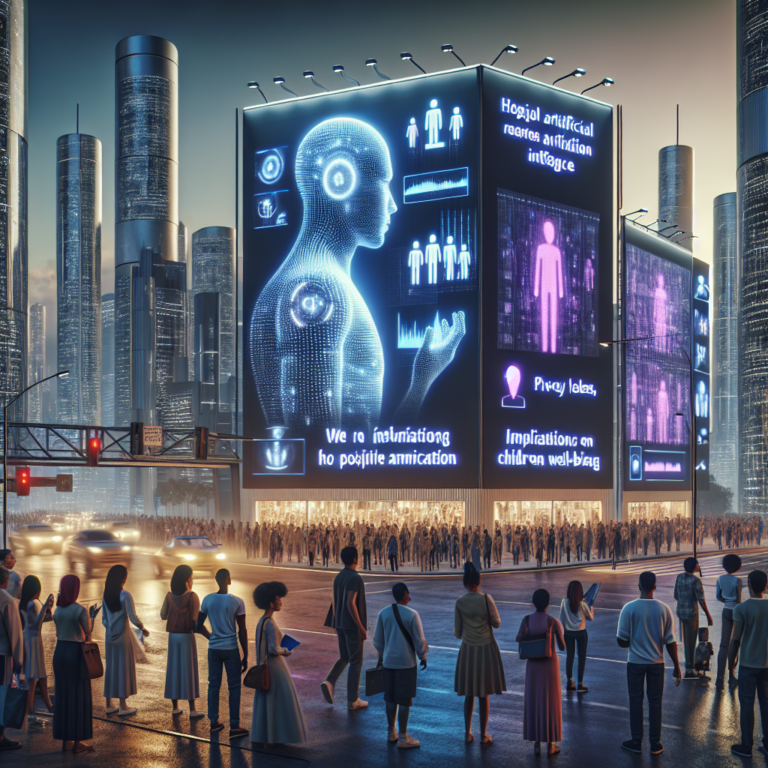
Visualizing the Impact: A Political Debate Scene
To illustrate the theme of trust and uncertainty in political advertising, imagine a scene where a political candidate stands confidently at a debate podium. In hand, they grasp a sleek tablet, a beacon of modern technology displaying a holographic AI-generated message.
The Audience’s Reaction
Behind the candidate, the audience’s mixed reactions encapsulate the public sentiment:
- Some members shake their heads, manifesting their disappointment and distrust.
- Others look intrigued yet confused, pondering the implications of AI in political contexts.
- A few appear surprised, illustrating awe at the technological advancement.
Visual Contrast: AI-Generated vs Traditional Content
The scene seamlessly blends both digital campaigns and traditional campaign elements:
– **Digital Billboards and VR Displays:** Representing the AI aspect, digital elements add a futuristic feel, showcasing the cutting-edge nature of AI technologies.
– **Paper Posters and Banners:** These classic marketing materials introduce a nostalgia of authenticity and human effort, contrasting sharply with the digital displays.
Navigating the Future: Balancing Tech and Trust
As political campaigns evolve, finding a balance between using advanced technologies and maintaining voter trust is crucial. Here are some strategies for candidates considering AI in their campaigns:
Ensuring Transparency
– **Clear Disclosure:** Candidates should be transparent about the use of AI in content creation. Voters are more accepting when aware of the technology’s role.
– **Open Dialogues:** Engaging in discussions about AI’s use in political campaigns can build understanding and trust among constituents.
Maintaining Human Element
– **Hybrid Approaches:** Combine AI’s efficiency with genuine human-generated content. This mix can maximize outreach while preserving authenticity.
– **Emphasize Human Interaction:** Focus on in-person engagements and human-driven platforms to build real connections.
Conclusion
Incorporating AI into political campaigns undoubtedly brings unparalleled efficiency and innovation. However, the trust deficit associated with AI-generated content poses a formidable challenge. By visualizing a scene where a candidate’s reliance on AI meets the skepticism of a diverse audience, we gain insight into the current state of political advertising. Navigating this landscape requires a careful consideration of both technological advancements and the imperative of maintaining trust—a vital currency in the political arena. As the digital horizon continues to expand, the ability to blend these elements will define the future success of political campaigns.
As the conversation about AI and politics advances, staying informed and critically examining the tools at our disposal is not just prudent—it’s necessary for the health of democratic processes worldwide.
“`
About the Author